
The Complete Guide to Overseas Withdrawals: ATM Fees, Activation Steps and Tips to Save on Charges
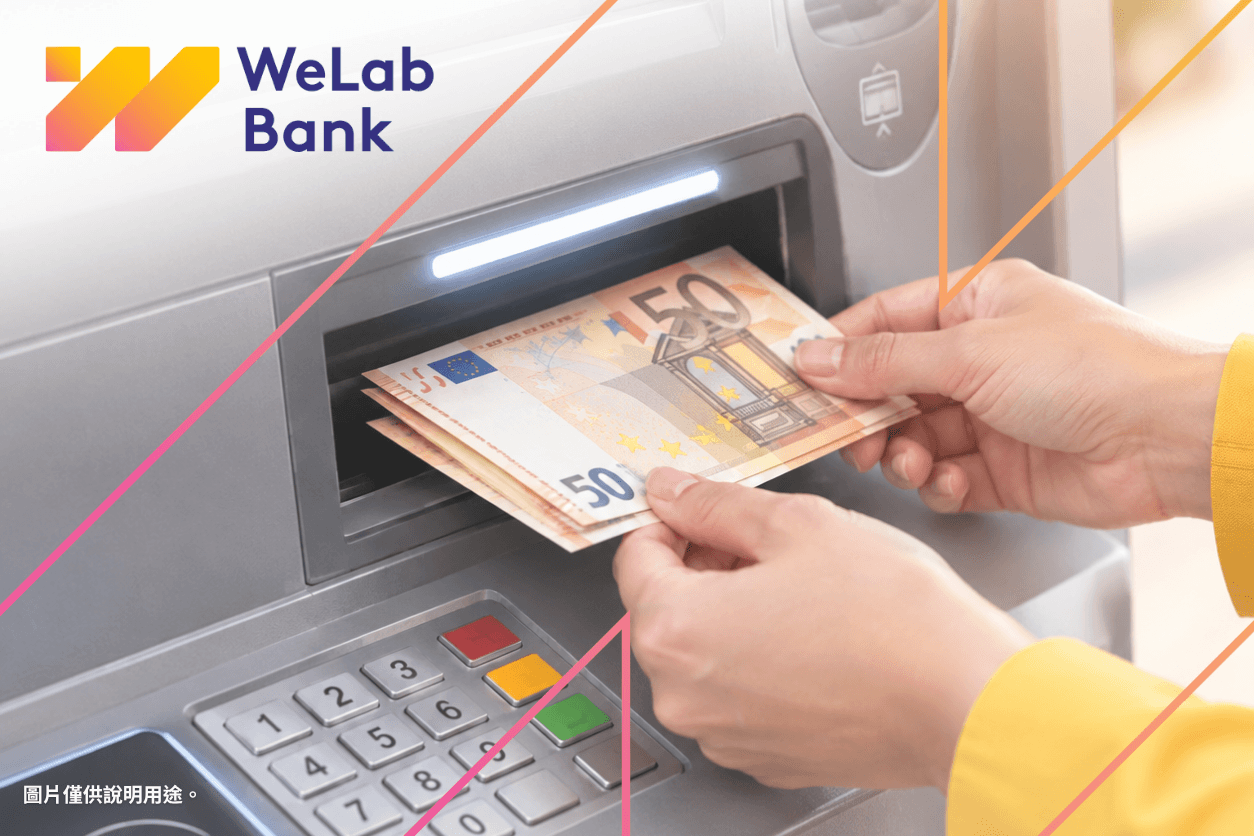
When travelling or on a business trip, it's important to carry some foreign currency cash for emergencies. Whether you use a debit card or a traditional ATM card, withdrawing cash from a local ATM is quick and convenient. However, overseas withdrawals can involve fees, exchange rate spreads, Dynamic Currency Conversion (DCC) and surcharges from ATM operators. This article explains how to activate overseas ATM withdrawals, how the fees work and what to watch for on safety, and shows you how to avoid costly charges.
How to Activate Overseas Withdrawals
To make sure your ATM card or debit card works overseas, you must activate overseas cash withdrawals and set a limit before you travel. Major Hong Kong banks and virtual banks have simplified the process, which can usually be completed quickly through online banking or a mobile app. Using WeLab Bank as an example, here's how to activate overseas withdrawals:
- Log in to mobile banking: Open the WeLab Bank App and select "Card" from the bottom menu.
- Find the overseas withdrawal setting: Under "Manage Transaction and card", tap "Overseas Withdrawal".
- Set a daily overseas withdrawal limit: Adjust your daily limit to suit your budget, so you have enough for emergencies while reducing the risk of loss from theft.
- Set the start and end dates: Set the validity period according to your travel plans to avoid the security risks of leaving it open for a long period. The period can run from your departure date to 1-2 days after your planned return, so you can still withdraw emergency funds if your return is unexpectedly delayed.
- Complete two-factor authentication: Complete the facial recognition security check to activate the service.
Safety Tips for Overseas Cash Withdrawals
While using ATMs overseas is convenient, security standards vary between machines. Always stay alert to the risk of your card details or PIN being stolen. To keep your account funds safe, bear the following in mind when withdrawing local currency overseas:
- Check card logos and networks: Make sure the back of your card shows the Visa / PLUS, Mastercard / Cirrus or UnionPay logo, and look for an overseas ATM displaying the same logo.
- Prepare a 6-digit PIN: Many overseas ATMs use 6-digit PINs. If your card has a 4-digit PIN, check with your card issuer or set up a 6-digit PIN before you travel.
- Choose a safer ATM: Use ATMs located in bank branches, large shopping centres or airports. Avoid machines in remote or quiet locations and check for suspicious devices or signs of tampering.
- Keep your receipt: Always print and keep the receipt after each transaction, so you can check it against your bank statement and use it for any future disputes.
Overseas ATM Withdrawal Limits and Common Reasons for Failed Transactions
If a POS terminal or overseas ATM shows a failed transaction when you try to withdraw cash, it is usually for one of the following reasons. The most common is not activating overseas ATM withdrawals or not setting an activation period:
- Overseas withdrawals not activated: Overseas withdrawals on Hong Kong bank cards are generally turned off by default. If you don't activate the function in advance, the system will decline the authorisation.
- Daily withdrawal limit exceeded: The transaction exceeds the daily overseas withdrawal limit you set in online banking, or the local ATM's per-transaction limit.
- Incorrect PIN: Entering your local 4-digit PIN by mistake or entering the wrong PIN several times in a row, can cause your card to be locked.
- Incompatible chip: Some older chip cards or magnetic stripe cards may not be recognised by newer ATMs overseas.
- Insufficient balance: Your HKD or foreign currency balance is not enough to cover the withdrawal amount and related fees.
Breaking Down Overseas Withdrawal Fees: Charges and Hidden Exchange Rate Costs
Many people assume an overseas cash withdrawal involves just one fee, but the actual charges may be more than you expect. Understanding the types of overseas withdrawal fees helps you assess the true cost of a transaction:
- Hong Kong card issuer fee: Traditional Hong Kong banks generally charge a fixed fee for each overseas withdrawal (usually between HKD 15 and HKD 50), and some banks may charge a percentage of the withdrawal amount[1].
- Card network fee: Card networks such as Visa, Mastercard or UnionPay charge a cross-border transaction fee of around 1%.
- Local ATM surcharge: Local banks or ATM operators may charge cardholders an additional service fee (common in places such as Thailand, Japan and the US, at around 150 to 220 units of local currency per transaction).
- Exchange rate spread: If the withdrawal is debited directly from your HKD account, the card issuer converts it at its real-time selling rate, which includes the bank's exchange rate spread.
Fee Formula and Example
To estimate the total cost of withdrawing local currency overseas, you can use the following formula:
Total cost = (Foreign currency amount withdrawn × Card issuer's exchange rate) + Card issuer fee + Local ATM surcharge
For example, if you withdraw JPY 50,000 in Japan, and the card issuer's real-time exchange rate is JPY 1 = HKD 0.052, the local ATM surcharge is JPY 220 and your Hong Kong bank charges a HKD 30 fee:
- Withdrawal amount in HKD: 50,000 × 0.052 = HKD 2,600
- Local ATM surcharge: 220 × 0.052 ≈ HKD 11.4
- Total cost: HKD 2,600 + HKD 11.4 + HKD 30 = HKD 2,641.4
As shown above, fixed fees make up a large share of the cost on small withdrawals, so it's best to withdraw less often, or choose a card that waives the fee. To avoid local ATM surcharges, use ATMs in major local bank branches where possible, and avoid standalone third-party ATMs in convenience stores or tourist spots. However, ATMs in popular destinations such as Japan and Thailand all charge fixed fees, and the actual charges depend on local rules.
Overseas Withdrawal Traps
The most common trap when withdrawing cash is Dynamic Currency Conversion (DCC). When you withdraw from an ATM, the screen may ask whether you want to be charged in HKD or the local currency, with options such as "Accept Conversion" or "Charge in HKD".
If you choose HKD, the ATM operator will apply its own exchange rate, which is often highly unfavourable. The markup is typically around 2.5% to 4%, and for some less widely traded currencies it can reach 5% or more[2]. Add the 0.8% to 1% Cross Border Fee (CBF) charged by some Hong Kong banks, and the exchange rate losses can be significant. When withdrawing cash, always choose to be charged in the local currency and decline DCC to avoid unnecessary charges.
Related reading: Hidden Transaction Fees Uncovered: Did You Know Local Card Payments Can Cost Extra Fee?
Comparing Payment Methods
Choosing the right payment method when travelling or shopping overseas can help you save a lot on exchange rate spreads and fees. Is it better to pay by credit card overseas, withdraw cash locally or use a multi-currency debit card? Here's a closer look at the features of each payment method and when to use it:
Card Payments vs Cash Withdrawals: Which Costs Less?
It mainly depends on where you're spending and your credit card's rebate rate:
- Use cards for purchases at overseas merchants: Card issuers and card networks charge a fee of 0% to 2.5% of the transaction amount[3], including a 1.95% foreign currency transaction fee (FCC). If your credit card's overseas spending cash rebate is higher than this, at 2% to 6%, the rebate can easily offset the fee and give you extra rewards. You can also simply pay with a multi-currency debit card that waives FCC.
- Save traditional overseas cash withdrawals for small emergencies: Card issuers generally charge a fixed fee of HKD 15 to HKD 50 for each overseas withdrawal, and local ATMs may also charge a surcharge[1]. For smaller withdrawals, fees make up a large share of the cost. To pay at cash-only places such as night markets, small shops or public transport, exchange some local currency before you travel, and only withdraw cash overseas when necessary, in a safer location.
Related reading: Money Changers vs Banks: Which Offers Better Exchange Rates in Hong Kong?
When Are Overseas ATM Withdrawals Worth It? It Depends on Your Card
As long as you avoid DCC and choose the right card, overseas withdrawals can still be cost-effective!
Using a traditional ATM card overseas to withdraw cash from your HKD account may involve the card issuer's overseas withdrawal fee, an exchange rate spread or a foreign currency transaction fee. If you choose to be charged in HKD, DCC may be triggered, with the exchange rate set by the merchant or ATM operator and potentially higher fees. If you need to withdraw cash from an overseas ATM, always choose the local currency, and check your card issuer's withdrawal fee, foreign currency transaction fee and ATM surcharge arrangements in advance.
The key advantage of a multi-currency debit card: one card linked to multiple currencies, debiting each transaction directly in the corresponding currency.
- Lock in your preferred exchange rate: Before you travel, you can convert HKD into currencies for popular destinations such as JPY, USD and RMB through the mobile app when rates are favourable, and hold them in your foreign currency account.
- Avoid real-time exchange rate fluctuations: When withdrawing from your foreign currency account overseas, the amount is debited directly from the corresponding foreign currency account and is not affected by exchange rate movements on the day of the transaction.
- Foreign currency fees generally waived: Most multi-currency debit cards on the market offer $0 foreign currency transaction fees, helping you save more than with traditional credit cards and ATM cards.
Related reading: A Beginner's Guide to Debit Cards: Comparing Debit Cards, ATM Cards and Credit Cards
How to Save More on Overseas Withdrawals with the WeLab Global Wallet Debit Card
By now, you'll see that choosing the right financial tool is key to tackling high overseas withdrawal fees and exchange rate spreads. WeLab Bank's WeLab Global Wallet Debit Card (multi-currency debit card) is designed for travellers.
With WeLab Global Wallet, you can convert currencies such as JPY, USD and RMB in advance in the App at preferential rates, anytime. With Hong Kong's first FX SmartSwitch function*, the system automatically compares your average foreign currency purchase cost with the real-time exchange rate when you make a transaction or withdrawal, and debits at the more cost-effective rate.
Even if you run short of cash overseas, as long as you have activated overseas withdrawals before departure, you can withdraw from an ATM that supports the Mastercard® network (including Cirrus®) in a few simple steps. The amount is debited directly from your foreign currency account, and the 1.95% foreign currency transaction fee is waived for designated currencies^, significantly reducing your overall overseas withdrawal costs.
FAQ
What is the daily limit for withdrawing local currency overseas?
Daily withdrawal limits vary by bank, card type and account settings. Cardholders can raise or lower their limit as needed through online banking or the mobile app. Check with your card issuer before you travel.
If I'm already overseas and realise I forgot to activate overseas withdrawals, can I still activate them?
It depends on your card issuer. As long as your phone is connected to mobile data or Wi-Fi, some banks allow customers to activate overseas withdrawals through mobile or online banking, and the setting may take effect immediately. Check your settings before you travel to avoid any disruption to overseas withdrawals.
What does an ATM card need to withdraw cash overseas?
In general, an ATM card must support overseas ATM networks (such as Visa / PLUS, Mastercard / Cirrus or UnionPay), and overseas withdrawals must be activated. Some banks may also require customers to set a validity period, limit or other security settings. Actual arrangements depend on the card issuer and card type.

Remarks:
*When you make a foreign currency transaction or ATM cash withdrawal with FX SmartSwitch enabled, WeLab Bank compares its prevailing exchange rate against your average foreign currency purchase cost. The system then automatically selects the optimal settlement method based on its built-in logic—either converting HKD from your Core Account at our prevailing rate or using your existing foreign currency balance.
This feature is neither intended to nor guaranteed to deliver better exchange rates, financial benefits, cost savings, or mitigation of FX losses. You assume all associated exchange rate risks and any consequences arising from manual adjustments to your average purchase cost. If we are unable to perform this comparison due to technical issues, system limitations, or circumstances beyond our reasonable control, WeLab Bank reserves the right, at its sole discretion and without prior notice, to directly debit the relevant foreign currency amount from your Core Account to complete the settlement. For full details on FX SmartSwitch and average purchase cost calculations, please refer to our website > FAQ > Debit Card and ATM > About Manage Flexi FX.
^Overseas spending may be settled either in the local currency of the country/region where the transaction takes place or in Hong Kong Dollar: (A) For transaction settled in the local currency, (i) foreign currency transaction fee waiver will apply if the transaction is settled in any of the 10 eligible foreign currencies (including Japanese Yen, US Dollar, Renminbi, Australian Dollar, Sterling Pound, Euro, Singapore Dollar, Canadian Dollar, Swiss Franc and New Zealand Dollar), and (ii) if a foreign currency exchange is required to complete the transaction, the exchange will be carried out at our prevailing exchange rate, and no foreign currency exchange handling fee will be charged. (B) For transaction settled in Hong Kong Dollar, the transaction will not be treated as a foreign currency transaction and will be subject to the exchange rate, fees, and charges determined by the merchant bank, rather than by us.
Disclaimer
The fees and exchange rate differentials mentioned above are for reference only. Actual costs may vary depending on the card issuer, transaction currency and merchant's settings.
The above content is for illustrative purpose only, please refer to the information displayed in the WeLab Bank App on the transaction day.
The information provided on the website is for general information only without warranty of any kind and may be changed at any time without prior notice.
Currency exchange involves risks. Foreign exchange markets are subject to unpredictable fluctuations. If you choose to convert your HKD or foreign currency deposit to other currencies, such foreign exchange transactions will be subject to risk arising from exchange rates fluctuation. As a result, you may suffer losses.
Note: Dynamic Currency Conversion (DCC) may occur when withdrawing cash overseas, making online or overseas transactions. If you see an exchange rate displayed or are offered an option to convert Hong Kong dollars into foreign currency or settle in Hong Kong dollars, such withdrawals or purchases are considered DCC and may involve higher fees. WeLab Bank shall not be responsible for any charges or fees imposed by merchants in relation to such transactions.
Reference:
[1] MoneyHero - 海外提款|各大銀行海外提款手續費及啟動步驟一覽 (Traditional Chinese only)
[2] 香港金融管理局 - 海外信用卡簽帳貼士 (Traditional Chinese only)
[3] Hong Kong Monetary Authority - Hong Kong Dollars or Foreign Currencies? Making the Smart Choice when Using your Credit Cards Overseas
• MoneyHero - 旅人省錢攻略:7招避開海外提款手續費陷阱 (Traditional Chinese only)