
A Mindset of “Retire without Retiring”
“Retire without Retiring” is not only about lifestyle after retirement, but also about financial planning. Every life stage calls for different investment strategies.
For many people, pre-retirement represents the wealth accumulation phase, which requires accumulating sufficient assets to meet future financial needs such as homeownership, family expenses, children's education, and retirement planning. Upon retirement, individuals enter the wealth decumulation phase, which requires equally careful planning to manage and utilize accumulated retirement savings effectively.

Why continuing to invest after Retirement Matters?
Maintaining an appropriate investment strategy post-retirement has become increasingly important, driven by three key factors:
Managing Inflation Risk
As living costs rise over time, adopting an overly conservative "cash is king" approach and leaving savings entirely in bank deposits, their purchasing power may gradually be eroded by inflation.

Managing Longevity Risk
Advances in healthcare contributed to longer life expectancies, with retirement easily spanning 20 to 30 years or even longer. Relying solely on accumulated savings creates the risk of outliving your wealth.
Generating Income Sources
Without a regular salary in retirement, generating passive income sources has become increasingly important. Appropriate income-oriented investment strategies may help investors seek income and cash flow sources to meet retirement living expenses.
Retirement Planning: The Three-Bucket Approach
A well-known approach in retirement planning is the "Three-Bucket Strategy," which provides retirees with a structured yet flexible framework for managing their funds. Based on near-term, mid-term, and long-term liquidity needs post-retirement, this strategy divides retirement reserves into three distinct "buckets". It suggests corresponding asset allocation approaches by taking into account the liquidity demands and risk tolerance of each phase:
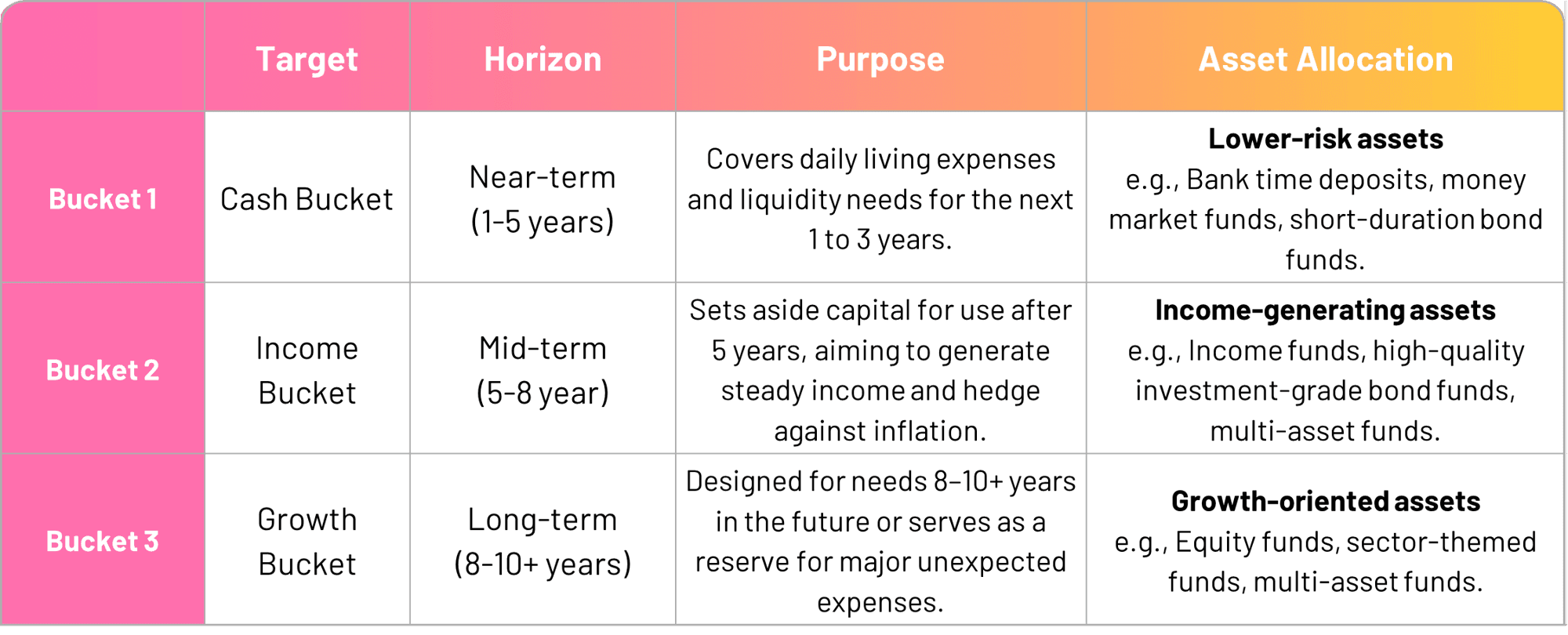
While early retirement planning is essential, managing your investments' post-retirement is equally critical. Periodically reviewing and dynamically rebalancing your portfolio across life stages are essential to realizing a "retire without retiring" mindset, helping you better prepare for retirement and manage your post-retirement financial needs with greater confidence.
The above information (including the "Three-Bucket Strategy" and asset classes referenced) is for illustrative purposes only. It does not imply that all investment funds within a given asset class share identical risk or return profiles. Investments involve risks. The price of fund units may go down as well as up. Past performance is not indicative of future results. Individual funds vary significantly in terms of risk profile, investment strategy, distribution policy, and asset allocation. Before making any investment decision, investors should evaluate their own financial situation, investment objectives, experience, and risk tolerance, and carefully read the relevant fund offering documents to understand the product characteristics and associated risks.
The above strategy and allocations shown are examples only and should not be construed as a standardized portfolio for all retirees. Actual asset allocation should be adjusted based on individual retirement goals, risk tolerance, financial situation, and income requirements.
Disclaimer
The information provided is for reference only and does not constitute any investment advice. Investment involves risk. The price of an investment fund unit may go up as well as down and investment funds may become valueless. Past performance is not indicative of future performance. Before making any investment decisions, you should consider your own financial situation, investment objectives and experience, risk acceptance and capacity, and carefully read the relevant fund offering documents to understand the nature and risks of the relevant products.