
How to Improve Your Credit Score: TU Scores, Record Retention Timeline and Rebuilding Plan
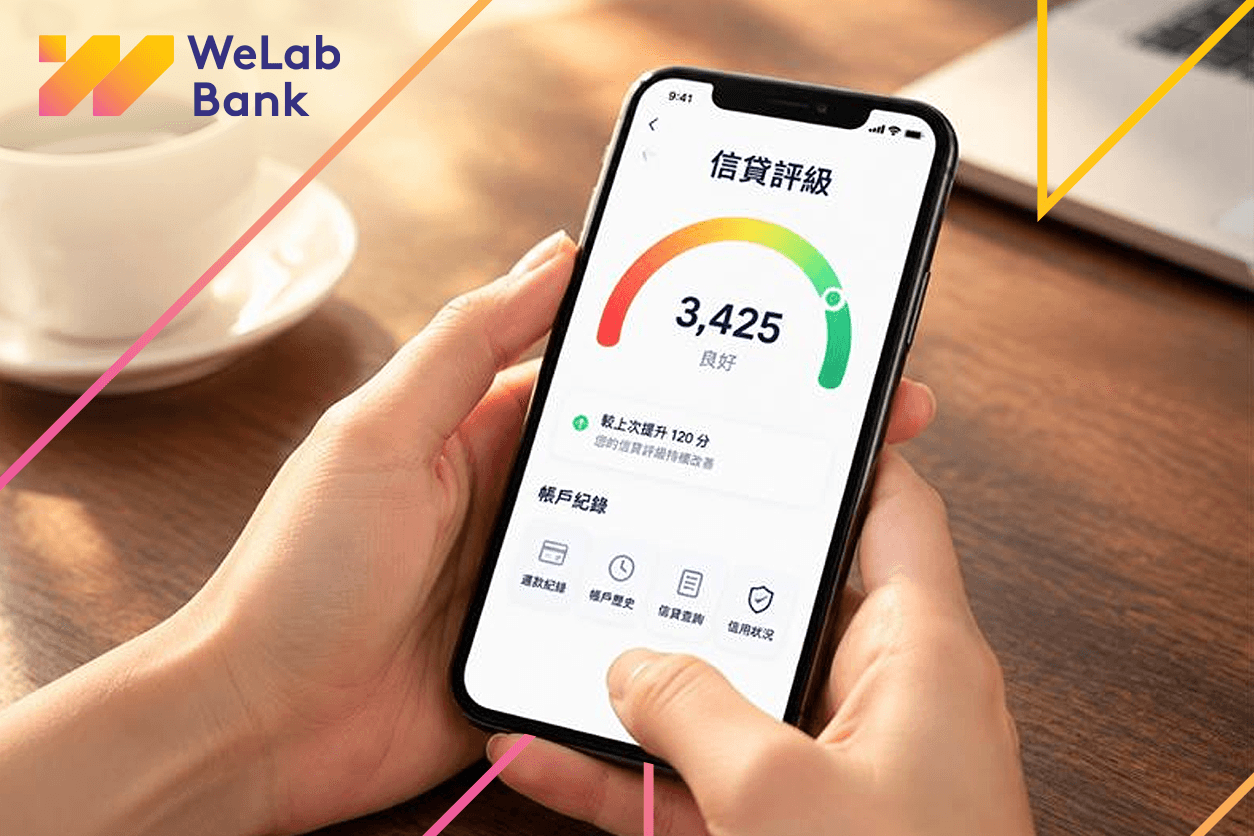
Many people only realise their credit score isn't great when they're offered a high interest rate on a personal loan or their credit card application is rejected. They then start searching for "how to improve my Score fast" or "can I wipe my credit record clean". There's no shortcut or guarantee to improving your Credit Score, and there's no such thing as wiping your record clean. Your score changes with your repayment history and overall credit position, and how often it updates depends on the credit reference agency's policy. Past overdue records are kept for a set period, while the on-time repayments you start building today will count from the next reporting cycle. In other words, how long it takes to improve your Score depends not only on your existing credit record, but also on when you start improving your repayment habits and when the information is updated on your credit report. This article first explains how TransUnion Credit Scores grades A to J are defined, then looks at what lowers your score and the real cost of a poor rating, and finally sets out 5 legitimate steps to improve it, along with a full timeline of how long negative records are kept.
What is a Personal Credit Score? Rating system explained
A Credit Score is a score calculated by a credit reference agency based on your borrowing and repayment history. It's used to predict how likely you are to repay on time in future. Banks generally refer to this score and the related report when assessing applications for credit cards, personal loans or mortgages.
According to the HKMA, a credit report generally covers 3 types of information[1]: your credit and repayment history (including any arrears), public records such as bankruptcy and debt collection, and records of banks or financial institutions accessing your report in the past two years. The report only records borrowing behaviour, not your income, savings or occupation. Someone earning HKD 100,000 a month who often repays their credit card late can have a lower score than someone earning HKD 20,000 a month who has never missed a payment.
Note that since April 2024, Hong Kong has operated the Multiple Credit Reference Agencies Model (MCRA). Two credit reference agencies, TransUnion and PingAn OneConnect Credit Reference, now share the same credit data platform[2]. Both agencies use the same data sources but apply different scoring models, so your scores may differ. The A to J grades most people are familiar with and most commonly discussed, are TransUnion's (commonly known as TU) rating system.
TU Credit Score A–J Grade Table
TransUnion divides Credit Scores into 10 grades, A to J, based on your score, with A being the highest. The score range is generally cited as 1,000 to 4,000 points. The range for each grade is as follows:
Grade | Credit Score Range | Category |
Grade A | 3,526 – 4,000 | Super Prime |
Grade B | 3,417 – 3,525 | Prime Plus |
Grade C | 3,240 – 3,416 | Prime |
Grade D | 3,214 – 3,239 | Near Prime |
Grade E | 3,143 – 3,213 | Near Prime |
Grade F | 3,088 – 3,142 | Near Prime |
Grade G | 2,990 – 3,087 | Near Prime |
Grade H | 2,868 – 2,989 | Near Prime |
Grade I | 1,820 – 2,867 | Subprime |
Grade J | 1,000 – 1,819 | Subprime |
The ranges reveal 2 things. First, the gaps between grades D to F are relatively small, so even a slight change in score can move you up or down a grade. Second, grade I spans more than 1,000 points, so two people with an I grade can be in very different positions.
Grade H or I doesn't necessarily mean you can't borrow. The Hong Kong Association of Banks has made clear that a credit score is not the only factor credit providers consider when assessing applications[2]. Income, debt-to-income ratio and repayment ability are equally important. However, applicants with a lower grade are generally offered higher interest rates and lower loan amounts.
Why does your Credit Score drop? 6 factors that affect your score
Key factors include your repayment history, credit utilisation and the number of credit enquiries. Your score isn't about how much you owe, but how you manage your debt and whether you show signs of difficulty repaying. Here are 6 factors that affect your credit score[1][3][4]:
- Late or missed payments: Repayment history has the biggest impact on your score. Even if you pay your credit card just a few days late, your report will record the overdue payment.
- Paying the minimum payment over a long period: Paying minimum payment on time doesn't count as overdue, but if you only pay the minimum for a long time, your debt and interest will keep growing, making lenders question your ability to repay.
- High credit utilisation: Credit utilisation is your outstanding balance divided by your credit limit. If a card with a credit limit of HKD 10,000 has a balance of HKD 7,000, your utilisation is 70%. TransUnion recommends keeping utilisation on each card and across your total credit limit at 30% to 50%, and no more than half[8]. High utilisation, or maxing out your cards, will have an even greater impact.
- Multiple credit applications in a short period: Each time you apply for a credit card or loan, the record of the lender accessing your report is kept for 2 years. Applying for several credit cards at once for welcome gifts or applying to several lenders at the same time to compare rates may be seen as urgently needing money or financial instability.
- Relying on cash advances: Credit card cash advances generally carry higher interest than purchases, usually with no interest-free period and interest accrues daily from the transaction date. A cash advance may not directly lower your score, but it quickly pushes up your balance and utilisation. Relying on cash advances over the long term may also signal financial stress.
- Public records such as bankruptcy or debt collection: These records appear directly on your report and may have a significant impact on credit assessments. They're also kept for longer. See the “full timeline and update cycle” below for details.
Many people wonder whether having too many credit cards will lower their rating. Generally, the number of cards you hold may not directly lower your rating. What matters more is whether your applications are concentrated in a short period and your overall credit utilisation. For example, 10 cards paid off in full is far better than 2 cards that are both maxed out. For personal loans and other unsecured loans, repaying on time helps build a good credit record. One of the key factors affecting your score is whether you have any overdue payments during the loan term.
What are the consequences of a poor Credit Score?
Common consequences of a poor Score include being charged higher interest rates, being approved for lower loan amounts or credit limits, and having credit card or loan applications rejected. Some employers may also check candidates' credit records when hiring for roles such as accounting or credit approval, and a bankruptcy record may affect applications for professional licences.
Many people ask how much the annualised percentage rate (APR) on a loan differs between a grade A and a grade I Credit Score. First, what is APR? It combines interest with related fees and charges, such as handling fees, and expresses them as an annualised percentage, so you can compare the true cost of different loans on the same basis. There is no standard rate for each grade. Each lender sets its own pricing based on the applicant's credit record, and the final rate depends on the applicant's information and personal credit history.
For the same loan amount and repayment period, the higher the APR, the higher your interest cost and total repayment. That's why, rather than shopping around for rates, taking the time to review and improve your credit record before applying for a personal loan can save you more. The time needed will depend on your individual circumstances and the credit data update cycle.
(The above is a hypothetical example calculated on an equal instalment basis, used only to illustrate differences in interest rates. It is not a quotation from any institution.)
Related reading: Choosing Personal Loans: A Comparison of Digital Banks, Traditional Banks, and Financial Companies
Common ways to improve your personal credit record: 5 practical tips
There are 5 common ways to improve your personal credit record, work by building a new, positive record (by consistently repaying on time) to improve your old record, not by deleting it.
- Get your report and check for errors: Every 12 months, you can get one free credit report from each credit reference agency. Check each account, repayment status and enquiry record[6]. If you find an account that isn't yours or an incorrect overdue record, you can ask the credit reference agency or the relevant lender to correct it. This is the only legitimate way to remove a negative record, and it only applies to incorrect information. It also helps prevent and combat identity theft.
- Set up autopay for all bills: Repayment history is the most important factor in your score. You first need to make sure you don't miss any payments or create any new overdue records before you can improve your score. Note that even if you pay on time, not paying in full can still affect your credit record and score, and make lenders question your ability to repay[3].
- Lower your credit utilisation: Pay off the card with the highest balance-to-limit ratio first. For example, if you have two cards each with a HKD 20,000 limit and balances of HKD 18,000 and HKD 2,000, pay off the HKD 18,000 card first. This brings down your credit utilisation and eases the "maxed-out" situation.
- Pause new credit applications: In the months before applying for a mortgage or large loan, avoid applying for new credit cards or other loans to reduce credit enquiries on your record.
- Consolidate high-interest credit card debt into fixed instalments: If you have balances on several credit cards and can only afford the minimum payment each month, consider a WeLab Bank Debt Consolidation Loan (also known as a balance transfer loan). This lets you take out a lower-interest instalment loan to pay off your credit card debt in one go. Once your card balances are cleared, your utilisation drops immediately and you only need to make one fixed monthly repayment, making it easier to pay on time.
Common misconceptions about improving your rating
Here are some common claims about improving your rating that don't hold up. Watch out for these:
Cancelling a credit card wipes your record clean?
Cancelling a credit card won't remove past overdue records. If you still have balances on other cards, cancelling one card actually reduces your total credit limit and increases your credit utilisation. An older card with consistent good repayment record also reflects your positive repayment history.
Paying off your debt brings your rating back up right away?
Lenders upload their latest data to their platform monthly, and changes only appear in the next reporting cycle. If you've had a payment overdue for more than 60 days, your rating won't recover immediately even after you pay it off and the overdue record will still be kept for some time[1].
Never using a credit card is the safest option?
If you've never applied for any personal credit, there will be no information about you in the credit database[7], which makes it even harder for lenders to assess you. Using a credit card in moderation and paying it off each month is how you build a record.
Credit card instalments always lower your score?
An instalment plan is simply a credit account, and repaying on time won't create a negative record. What to watch is that instalments increase your total debt and whether you have too many instalment plans open at once.
Checking your credit report lowers your score?
Getting your own report is different from a lender accessing it to assess an application. Take WeLab Bank's Intelligent Financial Health Analysis* as an example: it is officially stated that checking your TransUnion credit score or downloading your report won't affect your score[7].
Paying an agent can delete negative records?
Accurate negative records are only deleted once the set retention period ends and no one can remove them early for a fee. Be very careful with services that claim they can wipe your record clean.
Can you wipe your Credit Score clean? How long it takes to improve: full timeline and update cycle
How long it takes to improve your score depends on the type of record. Here are the retention periods and update cycles for each type of record:
Type of Record | Update Cycle |
Lower balances and new on-time repayments | Lenders upload customers' latest data to the credit data platform monthly[6] and changes only appear on your report after the lender updates the data. |
Credit enquiry records | Your report shows records of banks or financial institutions accessing your report in the past 2 years[1]. |
Records of payments overdue for more than 60 days | Kept for 5 years from the date the overdue amount is repaid in full[1]. There's no standard recovery period for your score. The key is to pay off the overdue amount as soon as possible, so the 5-year retention period starts sooner. |
Bankruptcy records | According to the Office of the Privacy Commissioner for Personal Data[7], public records of a bankruptcy declaration may be kept for 8 years from the date of the declaration. Data on related overdue accounts is deleted 5 years after discharge from bankruptcy, provided you have given the credit reference agency proof of discharge. |
Type of Record Update Cycle
Lower balances and new on-time repayments Lenders upload customers' latest data to the credit data platform monthly[6] and changes only appear on your report after the lender updates the data.
Credit enquiry records Your report shows records of banks or financial institutions accessing your report in the past 2 years[1].
Records of payments overdue for more than 60 days Kept for 5 years from the date the overdue amount is repaid in full[1]. There's no standard recovery period for your score. The key is to pay off the overdue amount as soon as possible, so the 5-year retention period starts sooner.
Bankruptcy records According to the Office of the Privacy Commissioner for Personal Data[7], public records of a bankruptcy declaration may be kept for 8 years from the date of the declaration. Data on related overdue accounts is deleted 5 years after discharge from bankruptcy, provided you have given the credit reference agency proof of discharge.
H3: Can you wipe your TU credit report clean?
No, you can't wipe your TU credit report clean. Accurate negative records are only deleted automatically once the retention period ends. For example, records of payments overdue for more than 60 days are kept for 5 years after the amount is repaid in full[1]. The deletion and retention of records are handled by the credit reference agency in line with statutory and industry codes and can't be controlled or sped up by individuals. The only records you can ask to have deleted early are incorrect information, or accounts that have never been overdue for more than 60 days and have been repaid in full and closed[9].
H2: Consolidate your debt with a WeLab Bank Debt Consolidation Loan
If your rating has dropped mainly because of balances on several credit cards, consolidating them into one fixed instalment plan is a practical option, as mentioned above. A WeLab Bank Debt Consolidation Loan (also known as a balance transfer loan) lets you turn balances on multiple credit cards into one instalment loan with a fixed term. Loan amounts range from HKD 10,000 to HKD 1,500,000, or 25 times your monthly salary, whichever is lower, with repayment periods of 6 to 72 months. You can complete the whole application in the WeLab Bank App[5], with no need to visit a branch.
Before applying for a loan, you can use the Smart Financial Health Analysis* in the WeLab Bank App to check your TransUnion credit score. Checking won't affect your score. The App provides a simplified version of your TransUnion credit report, and the full version is available by subscribing through TransUnion. Once you know your current personal Credit Score, you can decide whether to apply based on your actual needs and ability to repay.
Whether debt consolidation works depends on one thing: not building up new credit card debt after you've paid off your cards. Repaying on time regularly helps build a good repayment record. There's no way to wipe your Credit Score clean, and how quickly and how much it improves depends largely on your monthly repayment record and personal financial situation from then on.
H2: FAQ
Will my Credit Score improve right away after I pay off all my credit card debt and other debts?
No, it will only be reflected after the lender's next data upload. Lenders upload their latest data to the credit data platform monthly, and each credit reference agency has a reporting cut-off date. Changes after the cut-off will only appear in the next reporting cycle. If you've had a payment overdue for more than 60 days, your new on-time repayments will gradually be reflected after you pay it off, but the overdue record will still be kept for 5 years[1].
Can I still get a personal loan with a grade H or I Credit Score?
A credit score is not the only factor lenders consider. Income, debt and repayment ability are also taken into account[2]. Applicants with a lower rating is possible to get a loan but are usually charged higher interest rates or approved for lower amounts[1]. Rather than applying to several lenders at once, get your report first, find out what's lowering your score and improve your credit position before applying. This avoids multiple enquiries pulling your score down further.
How does only paying the minimum payment on my credit card affect my Credit Score?
Paying the minimum payment in full and on time won't create an overdue record. However, according to the IFEC, only paying the minimum for a long period may still affect your Score[3]. There are two reasons. First, your balance stays high for a long time, keeping your credit utilisation high. Second, interest keeps accruing on the unpaid balance and on new purchases right away, so your debt keeps growing. Lenders may question your ability to repay as a result, lowering your Score. Paying only the minimum once in a while has a limited impact. What matters is whether you can pay in full the following month.
Remarks:
To borrow or not to borrow? Borrow only if you can repay!
This article is for reference only and does not constitute any financial, investment or legal advice. Loan approval and the final interest rate depend on the applicant's individual circumstances. The above example is purely hypothetical and is used to illustrate differences in interest rates. It does not represent an actual quotation from any institution.
*The TransUnion Credit Score and related content in the Intelligent Financial Health Analysis are for reference only. WeLab Bank shall not be liable for any matter arising from the use of the Analysis or any dispute arising therefrom.
References:
[1] Hong Kong Monetary Authority – Personal Credit
[2] The Hong Kong Association of Banks – MCRA to Commence Service on 26 April: Public Can Start Obtaining Credit Reports
[3] Investor and Financial Education Council – Don't let the "inconsequential things" affect your credit score
[4] Hong Kong Monetary Authority – Smart Tips on Using Credit Cards
[5] WeLab Bank – Debt Consolidation Loan
[6] The Hong Kong Association of Banks – Credit Data Smart FAQs
[7] Office of the Privacy Commissioner for Personal Data – Code of Practice on Consumer Credit Data: How Does It Affect You?
[8] TransUnion – How Can I Improve My Credit Score?
[9] Office of the Privacy Commissioner for Personal Data – Code of Practice on Consumer Credit Data